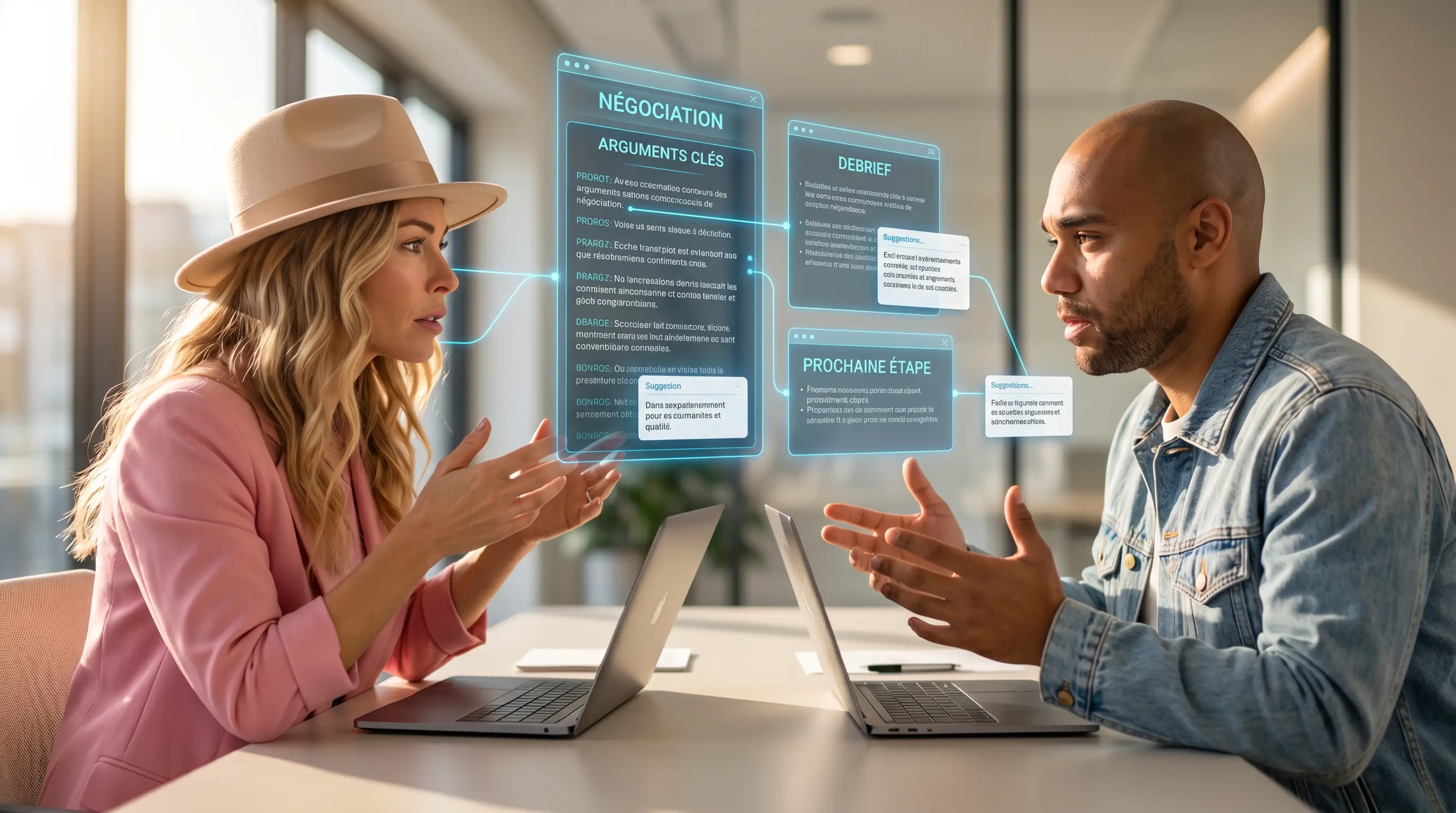
You landed an interview for an executive or leadership role. Good. Now you have to prepare for it, and not the way you used to. The interview is not won on the day. It is won in the hours before, when you structure your story, anticipate the hard questions, and walk in with a level of preparation the other candidates do not have.
AI changes the game here entirely. Not to cheat. To prepare with an intensity a candidate working alone cannot reach. Most people still walk into interviews with AI nowhere in their prep. The few who use it arrive with a level of readiness the interviewer notices in the first five minutes. Here is how I have the executives I coach work.
The interview is a pitch, not a recital
Most candidates prepare by revising their track record. They reread their resume, rehearse dates, titles, mandates. On the day, they recite. The interviewer checks out in thirty seconds.
An executive interview is a pitch. You are not narrating your life. You are telling one story: why you are the right person for this specific role, in this specific company, at this specific moment. That takes narrative work. What is your thesis? What problem do you solve? Which results already prove you can do it?
This is where AI helps first. You give it the job description and your resume, and you ask it to build an angle. Not a summary. A narrative angle. And you iterate until it rings true. AI does not replace what you have lived. It helps you structure it so it lands where it should.
Have AI play the interviewer
This is the technique I use most in coaching. You take an AI model, give it the job description and the context of the company, and you ask it to put ten questions to you as if it were the CHRO or the CEO sitting across the table.
The result is often unsettling. AI asks things you had not thought about. Why did you leave that role after eighteen months? What did not work in your last mandate? Why this company and not another? How do you handle an executive committee that pushes back?
You answer out loud. Record yourself if you can. Then have AI review your answer. It tells you what is vague, what runs long, what lacks a concrete example. Most executive interviews now run a behavioral format: past-behavior questions built to test how you actually operate under pressure. The STAR method (Situation, Task, Action, Result) keeps each answer structured, and AI is a sharp sparring partner to drill it until it holds. You start over. In two or three rounds you have answers that are solid, natural, and no longer sound memorized. The goal is not to recite. It is to walk in calm, because you have already been through it.
The questions that sting, prepare them first
Some subjects candidates dread. A gap in the resume. A layoff. A career stage where the market starts whispering "overqualified". A pivot into a new sector. A salary number you will have to put on the table. These are exactly the questions the interviewer will ask, because they want to see how you react under pressure.
AI helps you defuse them. You submit the sensitive point and ask for three ways to present it. Not to lie. To phrase clearly what you struggle to say simply. A gap becomes a deliberate period of reflection. A forced exit becomes a clear lesson. Your seniority becomes the central argument, the depth of experience that makes the difference when the ground is uncertain.
In coaching I always ask executives to list their three blind spots. Then we work them with AI until the answer fits in four sentences. Clean, honest, convincing. If you do not prepare these subjects, you will be subjected to them. And it shows.
Your pitch has to fit in two minutes
When the interviewer says "tell me about yourself", they do not want a twenty-year career summary. They want to understand, in two minutes, who you are, why you are here, and what you bring. That is the pitch. Most executives blow it, because they try to say everything.
AI is excellent at this compression work. You give it your whole background and ask it to build a two-minute pitch in three beats. Who you are. What you have done that matters. Why this role, now. It hands you a draft, you rework it, you make it sound like you. Not a press release. You.
A good test is to read it to someone who does not know your field and see if they get what you are good at. If they check out, it is too technical or too long. If they lean in, you have something. Building a strong pitch with AI takes about an hour, and it is probably the highest-return hour of your whole search. You can also read my piece on the executive resume with AI to align the substance of your resume with your spoken story.
Research the company better than the other candidates
The candidate who walks in knowing nothing about the company beyond the "about" page is finished. The interviewer spots it in one question. At equal seniority, the one who knows the latest announcement, the sector stakes, the names on the leadership team, that one starts three lengths ahead.
AI saves you a huge amount of time on this research. You ask for a full briefing on the company. Its recent strategy, its results, its competitors, its culture, the weak signals. You ask it to look up the LinkedIn profile of the person interviewing you, what they have published, the positions they have taken.
I have seen candidates impress a CEO simply by quoting an article the executive had written three months earlier. It shows you prepared seriously. And it creates a human connection nobody improvises. If you want to structure your whole executive job search around AI, that is a topic in its own right, and one worth setting up before your first interview.
After the interview, the follow-up makes the difference
The interview is over. Most candidates go home and wait. Mistake. The follow-up note, sent within a couple of hours, is a powerful signal. It shows your professionalism, your ability to synthesize, and your motivation.
AI helps you write that note fast and well. You give it the three key points of the exchange, what struck you, what you want to reinforce. It gives you a short, personal note that recalls a specific moment in the conversation. Not a generic thank-you. A message that proves you listened and can synthesize.
That note often makes the difference when the interviewer is torn between two profiles. They remember the candidate who took the time to write. And if you are in process with several companies, AI helps you keep the follow-up rhythm without losing quality. Every message is tailored, every nudge calibrated. That is an edge you cannot afford to leave on the table.
Frequently asked questions
How does AI help you prepare for an interview?
Simulating questions, researching the company, structuring your pitch. AI makes you rehearse, not recite.
Can you use AI during an interview?
No. The preparation happens before. During the interview, you are the one talking.
How do you handle being called overqualified in an interview?
Do not dodge it. Your experience is an advantage, not a liability. AI helps you phrase that with clarity and conviction.
How long does it take to prepare an executive interview?
Two to three hours with AI. Without it, a full day, and the result is weaker.
Want to structure your interview prep with AI? Our executive coaching walks you through it, before, during, and after, so you show up ready.
Explore executive AI coaching →